Illuminated signs explained: light boxes, face-lit, halo-lit and LED neon
Updated 19 October 2026
Summary
There are four main types of illuminated sign. In a light box, the whole printed face lights up. Face-lit letters light up through their fronts. Halo-lit letters shine light back onto the wall, so each letter has a ring of light around it. Neon and LED neon flex make lines of light. This guide from Prodigy Graphics in Cape Town explains where each type works best, for shopfronts, receptions and wine estate crests. It also explains how to plan the power, placement and approval.
The four main types of illuminated sign
Light box. A light box is a shallow box, usually with an aluminium frame and LEDs inside. The front is translucent, often acrylic or a stretched flexible face, and it is printed or covered in vinyl. The whole face lights up evenly, so everything printed on it is lit, including full-colour logos and menus. A light box can be a custom shape. It can be single-sided on a wall, or double-sided as a projecting sign that sticks out from the wall.
Face-lit letters. These are separate built-up letters (also called channel letters) with translucent acrylic fronts and LEDs inside. The front of each letter lights up. People can read them clearly from a distance and at night, so they are common on shopfronts.
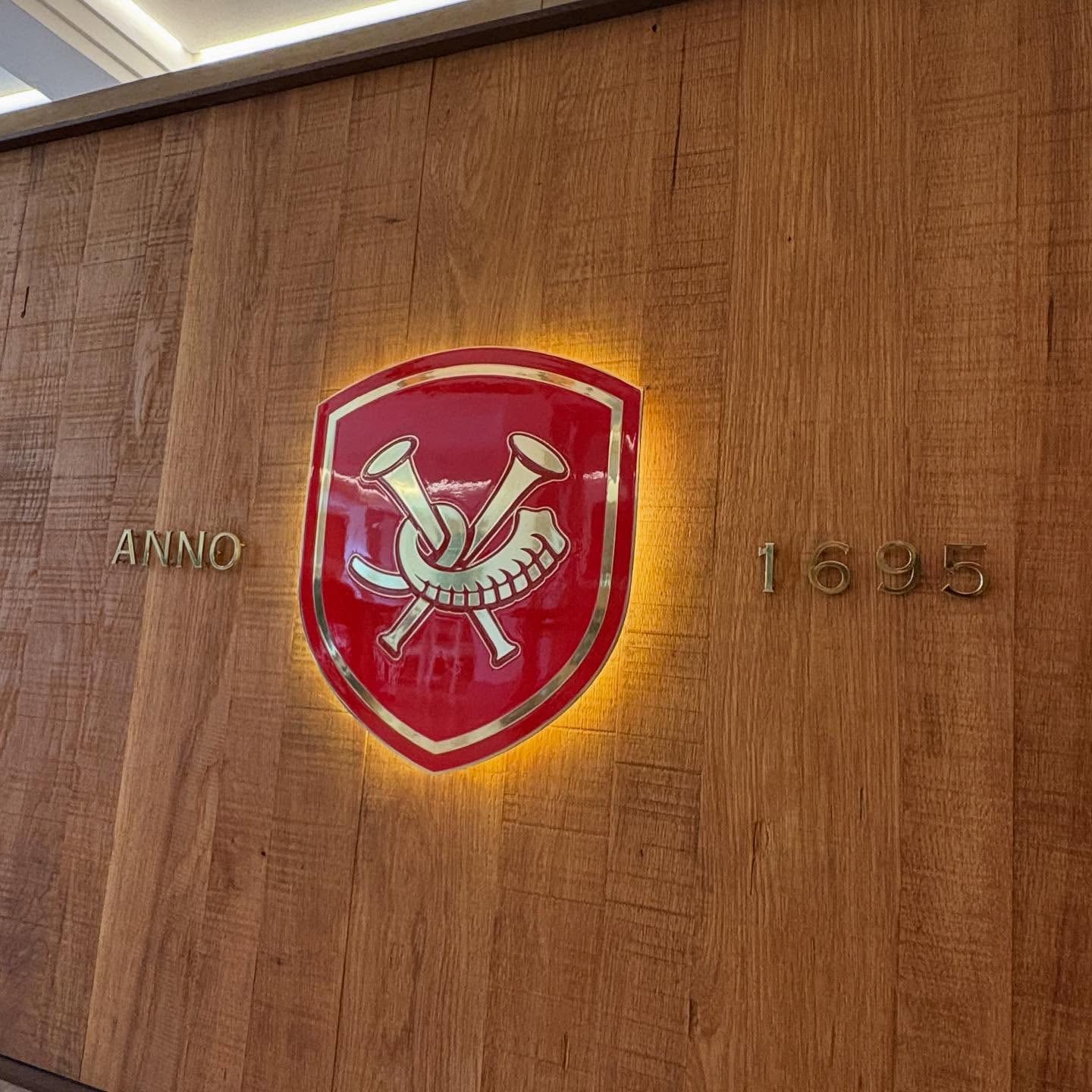
Halo-lit letters. These are letters or logos that light does not pass through, usually made of metal or solid acrylic. They are mounted on spacers a short distance from the wall, with LEDs that shine backwards onto the wall. The face stays solid and each shape has a soft ring of light around it. People also call this backlit or reverse-lit. The look is subtle and suits receptions and heritage buildings.
Neon and LED neon flex. These are lines of light that can follow lettering, logos or drawings. Traditional neon is a glass tube filled with gas. LED neon flex is a flexible tube with LEDs inside, and it usually runs at low voltage. Both are usually mounted on a clear or coloured acrylic backing.
A sign can also combine two types. For example, letters can light up through the front and also shine a halo onto the wall behind.
| Light box | Face-lit letters | Halo-lit letters | LED neon flex | |
|---|---|---|---|---|
| What lights up | The whole printed face | The front of each letter | The wall behind each letter | A line of light |
| By day | A printed panel | Coloured letters | Solid metal or acrylic letters | Coloured lines, often on clear acrylic |
| At night | A bright, even panel | Bright, readable letters | A soft glow around each shape | A strong outline of light |
| Best for | Shopfronts, projecting signs, menus | Shop fascias, signs seen from a distance | Receptions, estates, hotels, practices | Bars, studios, events, feature walls |
Where each type works best
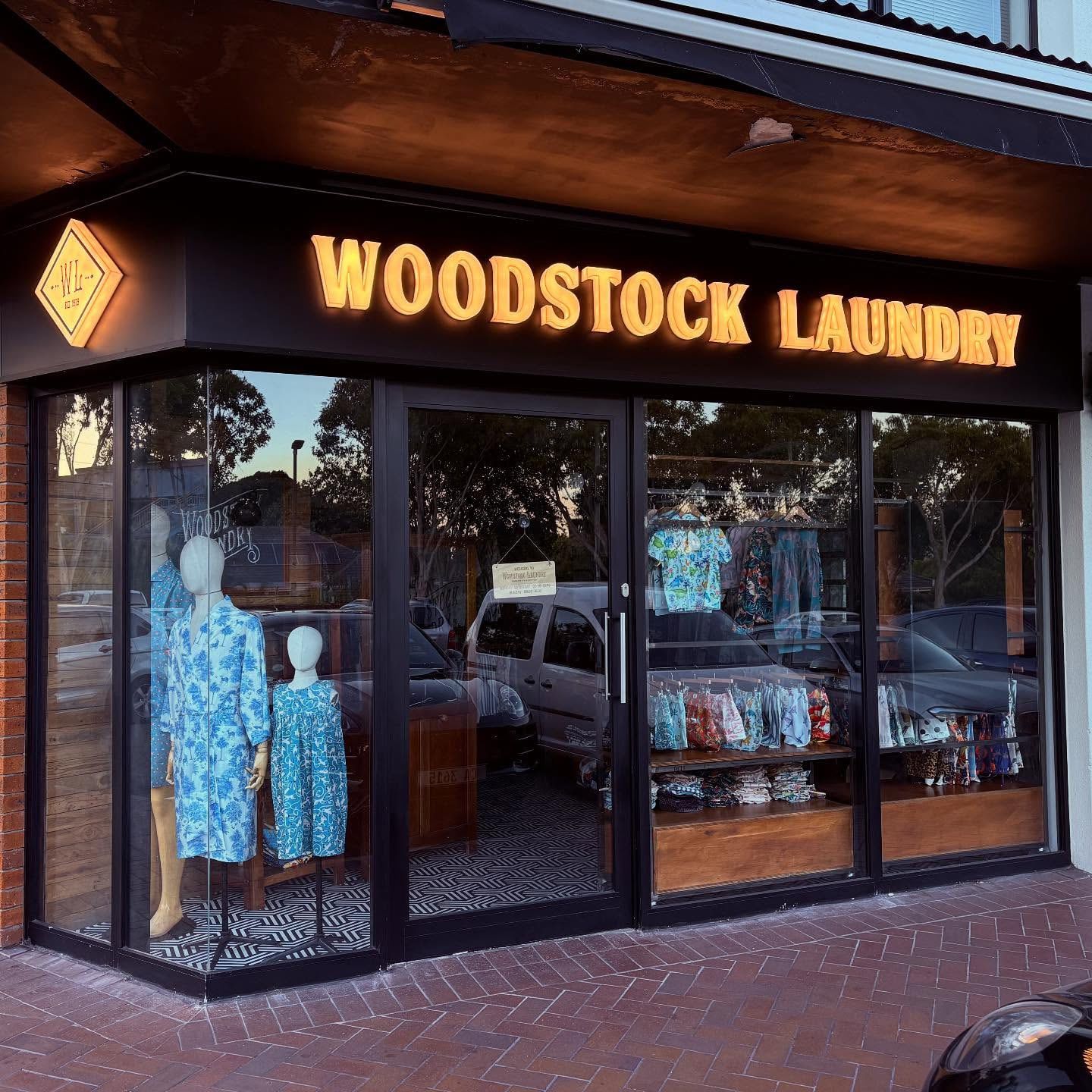
Shopfronts on a busy street. People can read light boxes and face-lit letters from across the road and after dark. At Woodstock Laundry, lit gold perspex letters sit on a matt black fascia. A short name like this is easy to read against a dark background.
Receptions and offices. With halo-lit letters, the light on the wall is part of the sign. They look neat by day. At night they give a soft glow, with no glare from a lit front.
Wine estates and hotels. Halo lighting suits crests and heritage lettering. At La Motte in Franschhoek, the red estate crest sits between Anno and 1695 on an oak wall, with a warm halo around it. There are also lit crests at the end of the barrel cellar and on the front of the tasting counter. At Lanzerac in Stellenbosch, the illuminated hotel and spa sign shows the crest, 1692 and five stars.
Practices and clinics. A halo-lit name helps patients find you when it gets dark early in winter. See the Bergrivier Dental sign, lit on its wall at night.
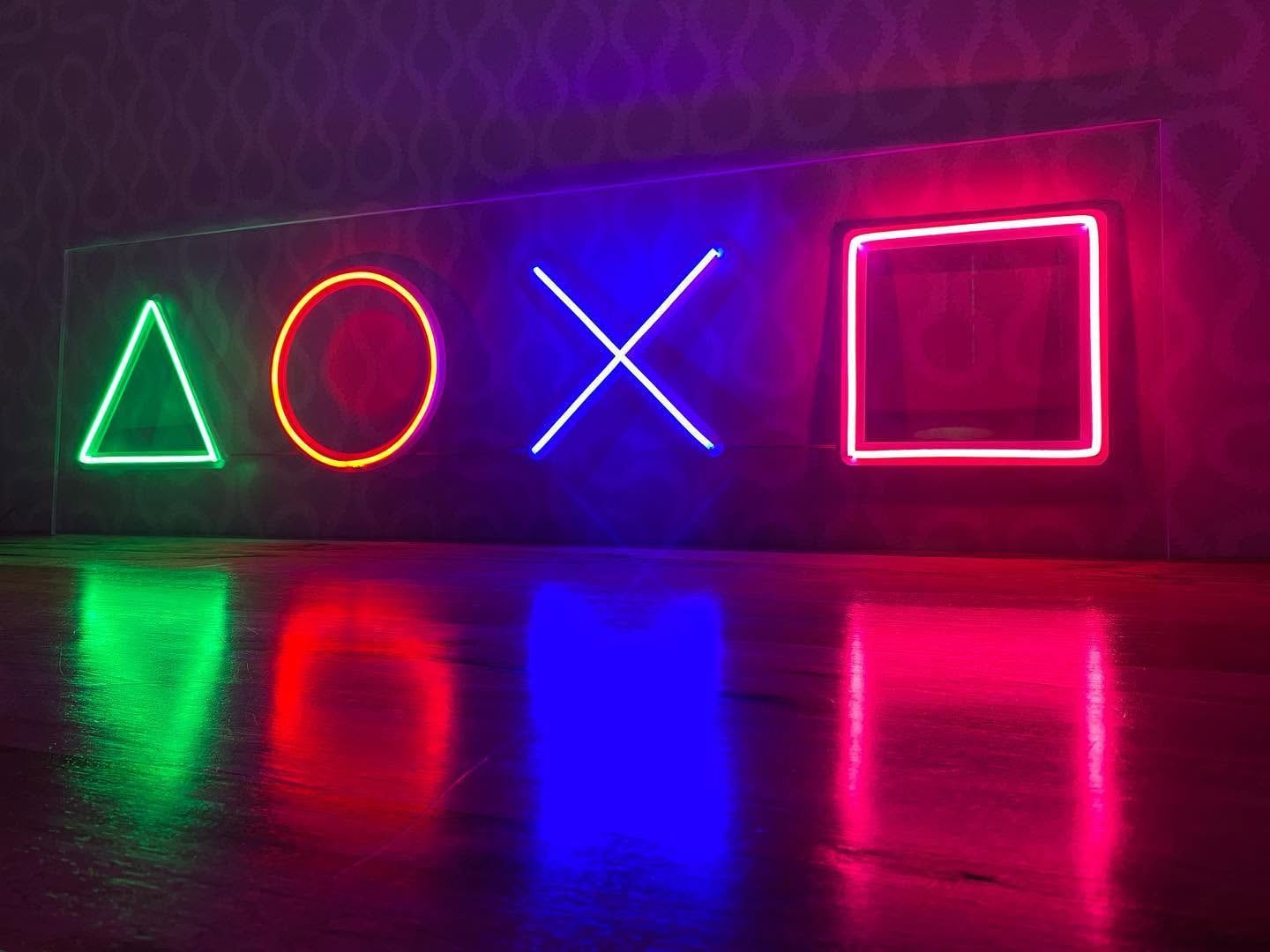
Bars, studios, game rooms and events. Neon-style signs add colour and fun. One example is the green, red, blue and pink game controller symbols, which reflect on a shiny floor.
Planning the power and placement
Plan the power for a lit sign before the wall is finished. This makes the job easier. Work through these steps early:
- Decide where people will see the sign from. This could be the approach road, across the street, through the front door or down a corridor. Check for trees, verandas and awnings that block the view.
- Size it for the distance. Letters that look large on a drawing can look small on a building. Before you decide, make a full-size mock-up with paper or tape.
- Plan the power point. Put an electrical point near the sign. If possible, do this before cladding, panelling or plaster goes on, so the cable can be hidden.
- Choose a place for the driver. LEDs run through a driver, which is a small power supply. Put it somewhere dry and ventilated that you can reach for maintenance. Do not seal it behind a fixed panel.
- Choose how it switches on. You can use a wall switch, a timer, or a daylight sensor that turns the sign on at dusk.
- Check the wall. The wall must be able to hold the fixings. For halo-lit signs, the wall finish changes the glow. A pale, smooth wall gives a bright, even halo. Timber, brick or stone gives a warmer, softer halo.
- Check how it looks switched off. A lit sign is off for most of the day, so choose faces and finishes that look good in daylight too.
- Use a qualified electrician for the connection to the mains. Set the brightness so the sign does not shine into neighbours’ windows.
Approval for outdoor signs in Cape Town
Outdoor signs in Cape Town may need approval from the City of Cape Town before they go up. This is more likely for lit signs and signs on walls that face the street. Check with the City. Also check with your landlord, body corporate or centre management, because they often have their own rules for shopfronts. Older buildings and heritage areas can have extra requirements. Start these conversations early. The sign should only be made once everyone has agreed on the design.
An image of the sign placed on a photo of your building helps with all of these discussions. Send us a photo of the wall, rough measurements and your logo through the quote page. You can also read more about illuminated signs and light boxes and neon and LED signs.